

 OK, so maybe this headline is slightly unfair, but it seemed like a good way to capture the essence of a USA Today story (9/18/13) about the fight over food stamps.
As you may already know, House Republicans are looking to cut some $40 billion from the SNAP program, otherwise known as food stamps, over the next 10 years.
It’s not unusual for politicians to disagree; one would hope that journalism might intervene on the side of the facts. But here’s how USA Today‘s Paul Singer presented the issue:
The cost of the federal food stamp program has exploded over the past decade, according to the Department of Agriculture. In 2001, the program served 17 million people at a cost of just over $15 billion. By 2012, there were 46 million people enrolled at a cost of a little under $75 billion.
Democrats say the program has grown because the economy tanked; Republicans argue much of the expansion is attributed to states giving benefits to people who do not qualify.
Well OK then–either there was a massive economic collapse, or people are cheating the government. Who’s to say which side is right?
The paper gets quotes from lawmakers–Republican Eric Cantor’s office explains they aim to “restore the integrity of this safety-net program,” while Massachusetts Democrat Jim McGovern says the idea that people are cheating in order to get food stamps instead of working is “a lie.”
Again, who’s right? That would seem to be a rather important matter. Luckily there’s plenty of evidence available. Alan Pyke of ThinkProgress recently noted (9/6/13) that the latest report from the Department of Agriculture’s inspector general found no problems with “high-dollar overpayments” in the SNAP program. And according to the Center on Budget & Policy Priorities (3/28/13), SNAP “has one of the most rigorous payment error measurement systems of any public benefit program,” with a very small amount of funds going to overpayment (about 2 percent of the total cost of the program). And the group’s research also shows that increased enrollment in SNAP is historically correlated with economic downturns. This is what caused the size of the program to spike in 2008 and 2009; the rate of growth has slowed considerably since then.
So there does not seem to be much of a problem with “waste”–which is the core argument that one side of this debate is making (unless their real aim is to simply reduce the amount of money poorer people get to buy food). But USA Today doesn’t seem interested in arriving at this conclusion, preferring to take the line they use in the subhead–that these cuts “could cut waste or hurt poor, depending on viewpoint.”
That’s balance, of course–and it’s also very misleading.
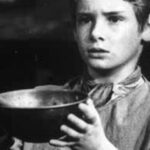


Let them eat cake
If they can find a bakery dumpster
Both sides. Let’s see, that would be … on one side, you’ve got hungry people who have had their budgets trounced by incomes cut by foreign labor competition, declining manufacturing jobs, and ever-mounting debt.
Then on the other side, you’ve got people who aren’t so hungry, and probably eat quite well (and thank you very much for that!), and don’t experience food insecurity (formerly known as starvation, but it’s no longer considered politically correct to say that).
It’s true that one side might be slightly at a disadvantage in the bargaining over this issue, but that’s OK because the Democrats — who are always the vanguard and protectors of the poor, not the wealthy Wall Street investors who fund their campaigns — will fight hard to make sure that the hungry get their food stamps. Not to mention this fantastic bridge I’m selling in Brooklyn.
The whole frame is wrong of course in the USA Today story…but it is also wrong with the FAIR story for the exact same reasons! Of course the economy “tanked”…but again, it tanked long before 2008 so that’s a misnomer and a straw man. Once the economy changed from producing value added goods to relying on debt creation to generate the illusion of growth it becomes only a matter of time before this “welfare” becomes a priority for politicians to prolong their stints in power. Tell me what our “economic policy” is? Honestly…can anyone here tell me what it is with a straight face? So without a coherent economic policy for the last 60 years is it a surprise we are arguing now over the consequences of a failure of “leadership” in the form of SNAP? Establishment politicians on both sides would much rather debate the size and scope of a welfare program than discuss how they are going to create real wealth in our nation that produces jobs…as our President jacks up the tax rates of small businesses to almost 40% while then a few months later calling for a lowering the corporate tax to what…25%? Hardly a whisper from the controlled left or right on this issue of course…because they follow along like good lemmings.
Lastly, it’s all a moot point. The more money that is “spent” (debt created) giving “food” to the poor instead of jobs does what to the prices of food? Lets see if anyone here has even a basic idea of what the consequences on food prices are when the government $75 billion dollars in to that market that wouldn’t have otherwise been there? Is this a subsidy to anyone you think? Could a program such as this be useful in helping a politician get people to vote for them? These are honest questions neither the USA Today article or this FAIR article even broaches…why? Is it really that complicated?
OR IS IT JUST EASIER TO FRAMETHE ARGUMENT IN “DO POOR PEOPLE DESERVE TO EAT”? Spare all of us your condescending tone.
… let them eat cake, indeed. Or newsprint, which in the case of USA Today must be nutritious because it has such a variety of color — a balanced diet. Or stew Paul Singer.
The ghost of Marie Antoinette must be fluttering about with all this talk of feeding the poor. How absurd we are still having this discussion especially in what in supposedly the richest and greatest nation on earth. Is this the so-called American Exceptionalism I keep hearing about?
Hell NO!! … feed the dead ones to the ones still living … after they’ve WORKED for it .. of course! … it’s this kind of godless socialism that’s destroying AmeriKa!!!!!!
It’s not overpayment that’s the problem. The problem is there is negative incentive to be a working, tax-paying member of society. Heck if I knew how to scam the system I’d stay home and live off the government too, NOT. That’s not how I was raised. I know too many on the snap program that say why would I work? I’ll lose my benefits!! WTF
“Should poor people eat?” …. This is a ridiculous question and it shouldn’t even be a question. POOR PEOPLE SHOULD EAT, just like rich people, politicians, the middle class, like people in other countries that we send our money to support. There is no question and there is NO other answer than “ALL people need to eat and SHOULD have food.” What Republicans are doing here is committing mass murder, between taking away food AND health care for the people in this country. We do better in providing for OTHER countries. America is generous with ALL other countries in providing aid, food and medicine and medical care. The rich and the powerful in America are sick and TWISTED in their thinking. These are the same people who vehemently talked about JOBS and campaigned on it in 2010, yet have not produced nary a one!! In fact, they have consistently TAKEN AWAY jobs. Until we stop voting these greedy, self-serving THIEVES into office, we will continue our downward spiral into being worse than a Third World Country.
The proposed cuts (of $40B) amount to a 5.2% reduction in the program.* So, it could be argued that they do aim to eliminate the 2% waste. But then, what does the other 3.2% aim to eliminate, Mr. Cantor?
*http://thinkprogress.org/economy/2013/09/16/2627291/need-know-weeks-house-vote-food-stamps/